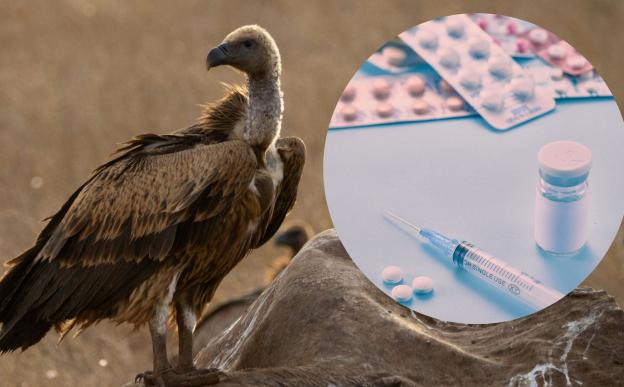
Despite successful bans on the veterinary drug diclofenac in Nepal and parts of India, a decade-long undercover investigation reveals that toxic alternatives like flunixin and nimesulide are rapidly replacing it, posing a renewed existential threat to the region’s critically endangered vulture populations.

Science

Bengaluru

Scientists from the Indian Institute of Technology (IIT) –Madras have developed an efficient, safe and cost-effective treatment strategy for fighting fungal infections, by linking anti-fungal drugs with sugar polymers in order to create gel-like formulations called hydrogels.
Bengaluru

The screening of humans and people is important to understand and mitigate the risk of a Zika virus epidemic. In their recent study scientists from the indian institute of Science, Bangalore, chalk out the details of how such a program should be carried out.  

Bengaluru

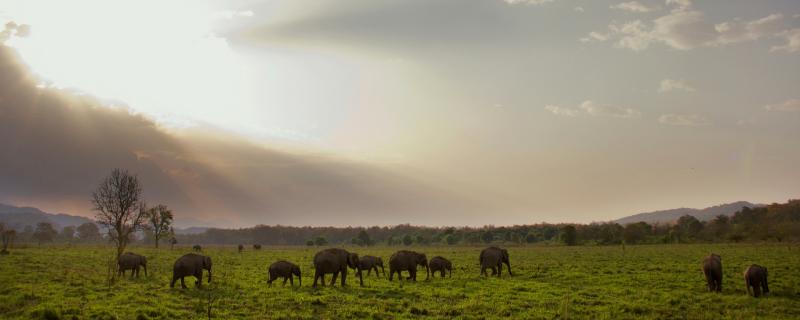
Scientists from the Jawaharlal Nehru Center for Advanced Scientific Research explore whether seasonal variation in abundance of food and water have any effects on the size of elephant groups. The researchers found that although group sizes were larger in the dry season compared to the wet season at the population level, that was not so at the clan level.

Mumbai

Scientists from the Indian Institute of Technology, Bombay, warn us that the problem of texting while driving is a much more worrisome one than previously anticipated. In their recent study they have look at how reaction times of drivers are affected by texting while driving. The study shows that texting can cause upto a 171% more delay in reaction time.

New Delhi

It was years ago that India’s first Prime Minister Jawaharlal Nehru had said, “It is science alone that can solve the problems of hunger and poverty, of insanitation and illiteracy, of superstition and deadening custom and tradition, of vast resources running to waste, or a rich country inhabited by starving people... Who indeed could afford to ignore science?” 

Nehru was one of the first people to use the term scientific temper and advocate the promotion of scientific temper:

Frogs have been around since the age of the dinosaurs, having survived four mass extinctions. Due to their remarkable ability to adapt to extreme conditions, they have thrived in almost all landscapes around the world from deserts to tropical rain forests, with some frogs even found in the Arctic circle. However, they are highly sensitive to changes in the environment. The world’s frogs are disappearing fast.

Bengaluru

Scientists from Council of Scientific and Industrial Research – Indian Institute of Toxicology Research (CSIR-IITR) and Amity University, Uttar Pradesh have been studying the harmful effects of Zinc Oxide nanoparticles (ZnO NPs) on living tissue and genes in mice, and their study reveals a potential threat lurking, if increasing use of such nanoparticles is not addressed soon.

Pune

What a year it has been for Indian science! From indigenous transistors to help India's Internet of things to solutions to living in harmony with wild animals we have seen it all. Here we take a look at the highlighs of Indian research in 2017.

Bengaluru

A new research from Indian Institute of Technology Madras, Chennai have developed a cost effective method of measuring the deformations in geotextiles-- a type of fabric generally used in the soil, using a common digital camera.

Bengaluru

2017 had been an eventful year for science all over the world. We have seen tremendous breakthroughs like the detection of gravitational waves, along with many discoveries and inventions that take us a step closer to making out lives better. Here we present snapshots of the remarkable contributions made to science in 2017.

Search Research Matters