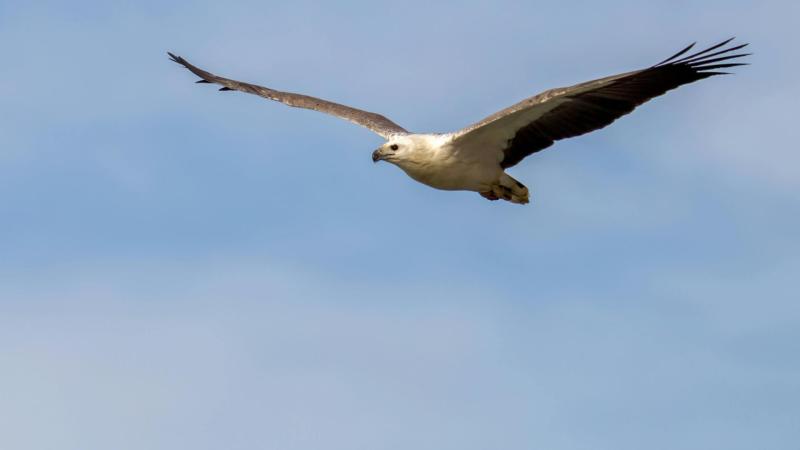
In the skies along the cyclone-battered coast of Odisha, the White-bellied Sea-Eagle (Haliaeetus leucogaster) is facing a crisis. The majestic apex predator, known for its soaring flight and skilled fishing, is facing a modern housing crisis that is drastically lowering its ability to raise young. A new study led by researchers from Berhampur University and Good Earth Environmental, Netherlands, has discovered that while these birds are intelligent enough to adapt to the loss of their natural nesting trees by moving onto power pylons and telecommunication towers, this adaptation is coming at a severe cost. The study identifies these man-made structures as ecological traps: habitats that appear suitable to raptors but actually lead to lower reproductive rates, threatening the future stability of this coastal sentinel.
The research, conducted over four breeding seasons from 2021 to 2025, shows that in the aftermath of frequent cyclones, which have uprooted many of the large, old-growth trees the eagles traditionally call home, the birds have been forced to improvise. To a desperate eagle, a tall metal transmission tower looks like a perfect substitute; it is high, sturdy, and offers a commanding view of the surroundings.
However, the data suggests otherwise. The researchers monitored 33 eagle territories and analysed 91 different nesting attempts. The results show that nests built in natural trees had a 100 per cent success rate, producing an average of 1.74 fledglings per attempt. In sharp contrast, nests on artificial structures failed nearly 40 per cent of the time, yielding a meagre average of just 0.68 fledglings.
Did You Know? It takes about 80 days for a White-bellied Sea-Eagle chick to grow old enough to fly (fledge). That is nearly three months where they are completely dependent on their parents for food and protection. |
To understand why this is happening, the researchers tracked the ‘fledgling rate’, which measures the proportion of hatched chicks that actually survive long enough to fly. Using satellite imagery from Landsat and data from Google Earth, combined with statistical modelling known as Generalised Linear Mixed Models, the team mapped the landscape surrounding every nest within a 2.1-kilometre radius. They looked at variables such as proximity to water, human population density, distance to roads, and the amount of built-up concrete area.
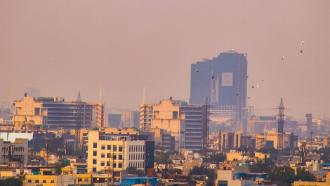
The findings revealed that the structure itself is only half the problem; the neighbourhood around it plays an equal role. The study found a strong negative correlation between human population density and eagle success. Nests located in areas with high human activity, heavy traffic, and dense settlements produced significantly fewer young. This is likely due to chronic stress. Just as constant noise and crowding can stress humans, the pulse of daily human disturbance, including vehicle noise, construction, and foot traffic, keeps parent birds on edge. This can lead them to spend less time hunting or caring for their young, or, in extreme cases, to abandon the nest entirely. Conversely, proximity to water bodies was a massive predictor of success. Nests closer to water mean shorter commutes for parents to catch fish, resulting in more food deliveries and healthier chicks.
Furthermore, this work distinguishes between the types of artificial structures. It notes that while telecommunication towers are safer from electrocution, they are subject to frequent maintenance visits by crews, which causes severe disturbance. Power pylons carry the additional, deadly risks of electrocution and collision with wires.
While earlier works have documented that raptors are moving into urban environments, few have quantified the fitness cost of this move. By calculating the specific fledgling rate, this study shows that even when eagles on towers raise a chick, they rarely raise a full brood of two, unlike their counterparts in trees.
The White-bellied Sea-Eagle is an indicator species; its health reflects the health of the entire coastal ecosystem. If they are struggling, the environment is under pressure. The study provides actionable advice for power and telecom companies: maintenance schedules should be adjusted to avoid the breeding season, and existing pylons can be retrofitted with raptor-safe platforms to prevent electrocution. More importantly, it underscores the urgent need to protect and replant cyclone-resilient native trees along the coast to safeguard these majestic sea eagles.
This article was written with the help of generative AI and edited by an editor at Research Matters.