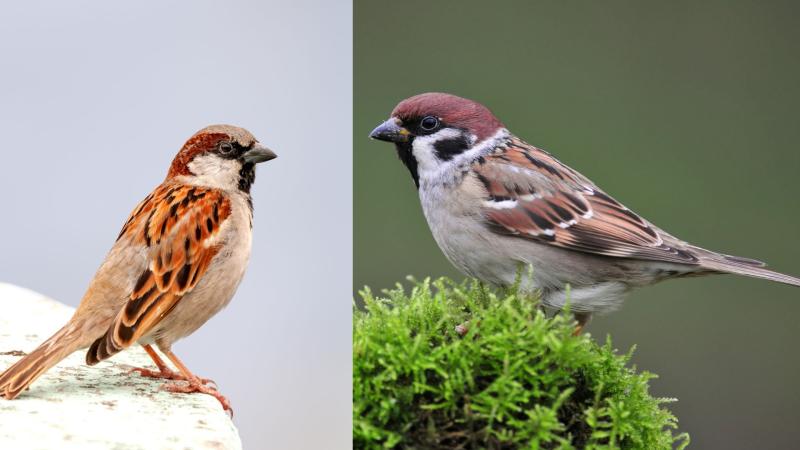
The familiar House Sparrow, a bird that thrives alongside humanity, is paying a heavy price for its urban lifestyle, according to a new study from researchers in India. Researchers found that female sparrows living in cities invest significantly more time and energy into parental care than their rural counterparts, yet their overall reproductive success, measured by the number of young that successfully hatch and leave the nest, is significantly lower. This suggests that the relentless pressures of urban environments are so intense that even a massive increase in parental effort is not enough to secure the survival of their offspring.
The study by researchers from Tropical Ecology and Evolution Lab at the Indian Institute of Science Education and Research (IISER) Bhopal, and collaborators from Srinivasan Services Trust, Tamil Nadu, and Koodugal Trust, Tamil Nadu, focused on House Sparrows (Passer domesticus) in the tropical environments of Tamil Nadu. The team found that the total parental investment by city-dwelling sparrows was markedly higher than that in rural areas. This extra effort was driven almost entirely by the females. Urban female sparrows spent significantly more time incubating their eggs and made more frequent trips to the nest to provision food for their young compared to rural females. In contrast, the male sparrows' contribution to total parental effort remained largely consistent across both urban and rural habitats, focusing primarily on guarding the nest.
The House Sparrow is one of the most widely distributed and abundant bird species in the world, from dense cities to rural farms. They are also obligate commensals,"meaning they depend heavily on humans and human-made structures for survival and nesting. |
Despite the city mothers' increased investment, the results for their young were disappointing. Rural sparrows achieved a hatching success of 62.5% and a fledging success, the proportion of hatchlings that successfully leave the nest, of 63.1%. Urban sparrows, however, saw their success rates drop to 54.7% for hatching and a stark 41.2% for fledging. This disparity, where greater effort fails to yield proportional nest success, strongly suggests that urban parental care is inefficient and energetically costly for the birds.
To understand the mechanics of this urban penalty, the researchers investigated key stressors and their link to reproductive failure. They found that the primary causes of nest failure were dramatically higher in the city. Nest predation was over three times more frequent in urban habitats (34.72%) than in rural areas (9.18%), with predators like Crows, Cats, and Sparrowhawks being the culprits. Furthermore, abandonment of nests was nearly three times higher in the city (59.72% vs. 21.43% in rural areas), likely due to heightened human disturbances and frequent predator visits.
The researchers conducted their fieldwork over two years in 2021 and 2024. They monitored 183 artificial nest boxes installed in 17 distinct geographical locations near the city of Chennai and the town of Arani. These locations were classified as urban or rural using a global dataset that categorises areas based on population density and settlement patterns.
To quantify the parental investment, the researchers used a combination of manual observation and endoscopic cameras over a total of 319 hours, ensuring minimal disturbance to the birds. They recorded the time male and female sparrows spent on six key parental activities, including nest construction, incubation, guarding the eggs and hatchlings, and food provisioning. These behaviours were then linked to the success rate using a tool called Structural Equation Modelling (SEM). This allowed them to map the direct and indirect influence of specific parental behaviours on reproductive outcomes like clutch size, hatching success, and fledging success in each habitat separately.
In the rural sparrows, the SEM analysis showed no significant direct or indirect effects of parental behaviour on reproductive outcomes, suggesting a relatively stable and predictable environment. However, the urban sparrows exhibited multiple strong and significant effects. While egg guarding had a positive impact on hatching success, both food provisioning and hatchling guarding were negatively associated with fledging success. This negative link highlights the energetic trade-offs; the extra effort spent on provisioning and guarding in a high-stress, predator-rich environment simply did not pay off.
The observed sex-based division of labour is consistent with general avian reproductive strategies, where females prioritise incubation and chick development, while males focus on defence. The higher foraging visits by urban females are hypothesised to be a compensatory strategy for the lower quality of urban food, such as cooked rice and fried snacks, which requires more trips to meet the nutritional needs of the young. The longer incubation time by urban females may also be a response to higher predation and egg usurpation rates, driving them to remain on the nest to reduce clutch loss.
As cities continue to expand rapidly, understanding the specific environmental stressors that limit the reproductive success of common, commensal species like the House Sparrow is vital. The findings emphasise that simply having food and nesting sites is not enough. Instead, focus must be on mitigating factors like noise and light pollution, reducing human disturbance, and providing safer, more natural nesting environments to formulate targeted conservation strategies and design truly wildlife-friendly cities.
This article was written with the help of generative AI and edited by an editor at Research Matters.
Editor's note: This article was updated to fix a typo. The error is regretted.