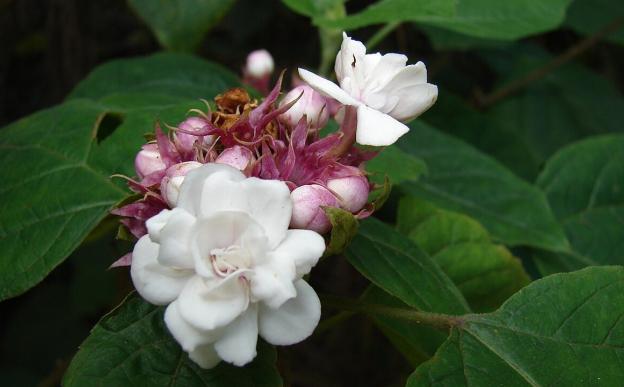
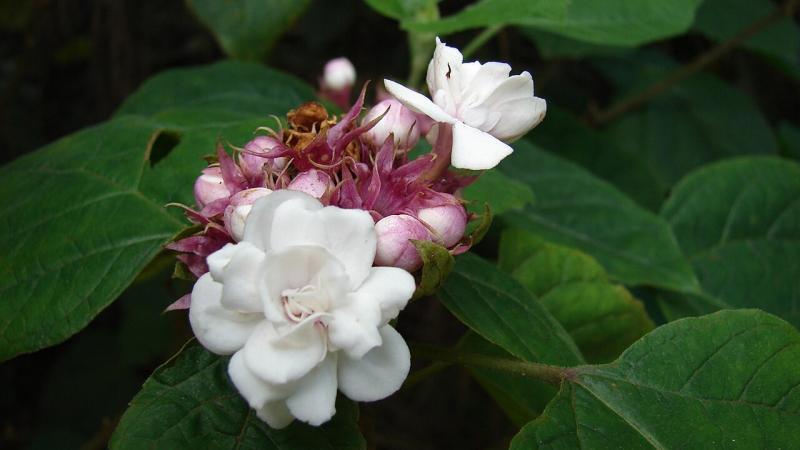
The burst of colours and the fragrance of flowering plants often hide the complex biological strategies they adopt to survive. In a recent study, researchers from the Indian Institute of Technology (IIT) Kharagpur explored these complex metabolic inner workings of Clerodendrum chinense, a tropical shrub known for its dual strategy of producing both highly fragrant petals and specialised nectar-producing glands on its sepals, the green covering of the flower bud that typically functions as protection for the flower in bud.
The research sought to understand how the plant manages its central carbon metabolism, or its internal energy currency, to fuel the simultaneous but distinct tasks of defending itself and attracting pollinators. By mapping the flow of carbon, the researchers found that a flower functions as a vast, multiplex biological factory, precisely timing the release of chemicals to ensure survival.
The researchers used a multi-disciplinary approach that combined chemical analysis with high-resolution imaging and genetic sequencing. They used Gas Chromatography-Mass Spectrometry, an analytical method that separates molecules of a compound and then identifies and quantifies each component. The team used the method to identify and quantify specific sugars, amino acids, and organic acids at different stages of floral development.
To observe the physical changes in plant tissues, they employed histological staining, which stains the different components in different colours, and transmission electron microscopy, which revealed the accumulation and breakdown of starch granules within floral cells. Finally, they used RNA sequencing to monitor gene expression, providing a blueprint of how the plant’s genetic instructions translate into metabolic actions. This comprehensive toolkit enabled the team to track how carbon, originally captured through photosynthesis in the leaves, is transported to the flower and converted into rewards such as nectar or signals such as scent.
The study shows that flowers are heterotrophic organs, meaning they cannot produce enough energy on their own and must import sugars from the rest of the plant. The study found that starch acts as a critical energy reservoir; it builds up during early bud stages and is rapidly broken down as the flower prepares to bloom. This breakdown provides the sucrose and hexoses needed for two primary purposes. First, the sepals secrete nectar that attracts ants, which act as bodyguards against herbivores. Second, the petals use the remaining carbon to synthesise volatile organic compounds that create the flower's signature scent, luring in pollinators, like bees and butterflies, once the flower opens. This spatial and temporal separation ensures that the plant does not waste energy and avoids a pollinator-ant conflict, where aggressive ants might otherwise drive away the very pollinators the plant needs.
By examining the accessory whorls (the sepals and petals) together, the researchers provided a holistic view of how primary metabolism supports specialised ecological traits. It bridges the gap between basic plant physiology and complex environmental interactions.
This article was written with the help of generative AI and edited by an editor at Research Matters.