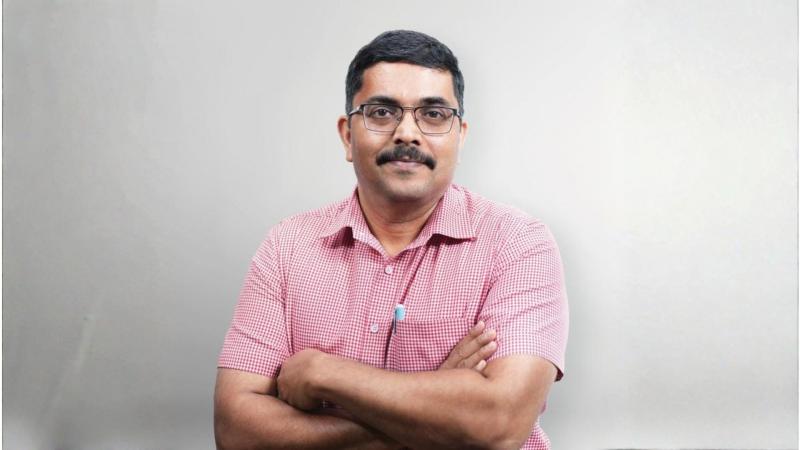
Padubidri V. Shivaprasad, a professor at the National Centre for Biological Sciences (NCBS) in Bengaluru, has been named the Food Security Winner of the prestigious 2025 Tata Transformation Prize. He was awarded for pioneering an out-of-the-box solution to the global food crisis: teaching rice to be wild again. He will receive INR 2 crores to advance his work, which uses cutting-edge genetic tools to develop rice varieties that can thrive amid climate change.
Professor Shivaprasad’s research tackles one of India’s most urgent challenges of feeding a population projected to reach 1.5 billion by 2050 amid worsening climate stress. His approach is a complete reversal of traditional farming methods. Instead of trying to improve modern rice, he aims to ‘de-domesticate’ it. For over 10,000 years, farmers have selected crops like rice for high yield and fast growth through domestication. However, this process has also removed many other vital features, such as the plant's ability to withstand harsh soil conditions, drought, pests, and poor nutrition. Professor Shivaprasad’s team is bringing these lost survival skills back.
The key to this transformation lies not in altering the rice plant's main DNA sequence, but in techniques such as epigenetic engineering and small RNA–based modifications. Epigenetics is the study of how behaviours and the environment can alter gene expression without altering the underlying DNA sequence. Professor Shivaprasad's lab compares the genetic sequences and epigenetic profiles of modern, high-yield rice with those of its tough, wild relatives (such as Oryza nivara).
Their studies have shown that the main differences in traits like stress tolerance and water efficiency lie in these molecular regulators, particularly tiny molecules called small RNAs. By precisely fine-tuning the expression of critical plant genes with these small RNAs, the researchers can reactivate wild traits lost during domestication. This new, highly precise method is a significant leap beyond traditional plant breeding, which is often slow and unpredictable. The engineered rice varieties promise to reduce farmers' dependence on expensive fertilisers and pesticides, lowering production costs while improving nutrition for millions.
Professor Shivaprasad's work is seen as a sustainable and scalable blueprint that could strengthen global food security, offering hope for staple crops worldwide in the face of rapidly intensifying climate pressures.
The Tata Transformation Prize, established by the New York Academy of Sciences and Tata Sons, recognises visionary Indian scientists whose breakthrough technologies address critical societal challenges across Food Security, Sustainability, and Healthcare.
"The scientific advancements achieved by this year's winners are the result of years of dedication and sacrifice. Their work is significant for India, and for humanity at large," said N. Chandrasekaran, Chairman of Tata Sons.
Apart from Prof Shivaprasad, the 2025 Tata Transformation Prize was awarded to two other Indian scientists across the Sustainability and Healthcare categories. The other two winners, both from the Indian Institute of Science (IISc) in Bengaluru, are Professor Balasubramanian Gopal, who won in the Sustainability category and Professor Ambarish Ghosh in Healthcare.
Balasubramanian Gopal developed a green chemistry platform that uses bioengineered E. coli bacteria, enhanced with artificial intelligence (AI), to sustainably produce key chemicals used in pharmaceuticals, cosmetics, and agriculture. This method offers a cleaner, cost-effective alternative to traditional, energy-intensive chemical synthesis, reducing pollution and supporting India's biomanufacturing sector.
Ambarish Ghosh pioneered the use of magnetic nanorobots, microscopic spiral-shaped devices, for targeted cancer treatment. Controlled magnetic fields can guide these nanorobots to travel through the body and deliver drugs directly to tumours, promising a more precise and less invasive therapy with fewer side effects, and lower costs.
All three winners will be honoured at a ceremony in Mumbai in December 2025.
Based on a Press Release from the National Centre for Biological Sciences
This article was written with the help of generative AI and edited by an editor at Research Matters.
Editor's Note: The story was updated to edit a sentence that was incomplete earlier. The error is regretted.