
Researchers have developed a computer model to simulate a potential H5N1 bird flu outbreak, caused by the common influenza A virus, in a realistic South Asian community. The findings show that the timing of initial public health measures is the single most critical factor in preventing a global pandemic. The research used an agent-based simulation framework, BharatSim, to model the two-step process of zoonotic spillover: from infected birds to humans, followed by subsequent human-to-human spread. The study’s primary goal was to explore how early interventions, such as culling, quarantine, and vaccination, could slow or even terminate an outbreak of Highly Pathogenic Avian Influenza (HPAI), with the H5N1 subtype being a prominent candidate for a future human pandemic.
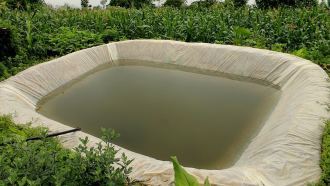
Researchers from Ashoka University and University of Copenhagen, Denmark, focused their simulation on a realistic population structure tailored to a low- and middle-income country (LMIC) setting. Specifically, they modelled a village in the Namakkal district of Tamil Nadu, India. This region was chosen because it is a major poultry hub, housing over 1,600 poultry farms and producing millions of eggs daily. This also made it a plausible location for an initial spillover event.
Did You Know? India has experienced several H5N1 avian influenza outbreaks in poultry. In 2025, India reported two fatal human H5N1 cases: a two-year-old girl in Andhra Pradesh and a man in Karnataka. |
The researchers used BharatSim, a highly granular agent-based model (ABM) framework, which is defined at the level of single individuals (agents) and their networks of interaction, unlike simpler compartmental models. The synthetic population of 9,667 individuals was built using real-world data from the Indian Census and other surveys, accounting for age, gender, home, and work locations.
The simulation tracked a two-step infection process. First, the spillover from birds to humans through primary contacts, like farm workers, was modelled using a force of infection proportional to the number of infected birds. Second, the human-to-human transmission occurred as primary contacts moved between their homes, workplaces, and schools, infecting secondary and tertiary contacts. Agents in the model spend 12 hours at home interacting with household contacts, and the remaining 12 hours at their workplaces or schools, interacting with a different set of contacts. This daily movement and network reconfiguration is a key feature of the model, allowing for a realistic simulation of disease spread.
To assess the pandemic potential, the researchers focused on two key epidemiological metrics. First is the basic reproductive ratio denoted by R0, which is the average number of people an infected person passes the disease to in a fully susceptible population. If R0 is greater than 1, the epidemic will take off. The second metric was the secondary attack risk (SAR), which measures the likelihood of transmission within a household. The simulations tested three interventions: culling (killing all birds in the farm), quarantine (locking down primary contact households), and vaccination (targeting primary and secondary contacts).
The results demonstrated that early culling, before the peak of infection in the bird population, significantly reduced the probability of spillover. If culling had been delayed, the prolonged exposure of primary contacts to the infected bird population shifted the distribution of primary human cases to the right, dramatically increasing the risk of multiple human infections. This highlights the importance of avian control measures to reduce the risk of spillover.
Crucially, quarantine proved to be the most effective measure for controlling human-to-human spread. When the threshold for active cases was set low (e.g., two infected individuals), quarantining the primary contact households consistently kept R0 below 1, effectively terminating the epidemic. Quarantine prevented the disease from entering the wider tertiary contact network, such as workplaces and schools. The researchers found that this intervention must be done very soon after the first case is detected, as failing to do so allows the disease to enter the tertiary contact network, making control far more difficult.
Vaccination, modelled as a targeted drive for primary and secondary contacts, was also simulated. The introduction of vaccines shifted the critical threshold of R0 towards higher human-to-human transmission rates, meaning the virus would need to be more transmissible to cause an epidemic. However, the vaccination drive did not significantly reduce the secondary attack rate as much as quarantine did, partly because the model assumed vaccination reduced only susceptibility, not infectivity.
The novel ABM approach enables the systematic, real-time exploration of policy measures to constrain disease spread. The research provides a powerful, real-time tool for public health policy. By allowing scientists to explore a range of policy measures before an outbreak occurs, the BharatSim framework strengthens the public health infrastructure's ability to respond effectively. The ability to rapidly tune the model to initial case reports means that crucial epidemiological parameters can be estimated early, guiding governments to implement the most effective, targeted measures to constrain disease spread and potentially avert a global pandemic.
This article was written with the help of generative AI and edited by an editor at Research Matters.