Researchers exploring the temperate forests of the Indian Himalayas have discovered a previously unknown species of mushroom, marking the first official record of this group of fungi in the country. The new species, named Hemileccinum indicum, was found growing among oak trees in the Bageshwar district of Uttarakhand. The discovery, published in the Nordic Journal of Botany, was made by a team of researchers from the Botanical Survey of India, the University of Torino in Italy, and St. Xavier’s College in Jharkhand.
The discovery was the result of macrofungal forays, which are specialised scavenger hunts for large fungi, conducted during the rainy seasons of 2022 and 2023. Lead researcher Kanad Das and his team collected the specimens from the Dhakuri region, situated at an altitude of over 2,600 metres. While the mushroom initially resembled known species from North America and China, a combination of genetic sequencing and electron microscopy proved that it was an entirely new branch on the tree of life.
To confirm the find, the team performed a multigene molecular phylogenetic analysis, a genetic test that helps map the evolutionary tree of a species. By comparing the DNA of the Indian specimens with that of other mushrooms worldwide, they found that, while it is a close sister to a species found in Florida (H. floridanum), it possesses a unique genetic signature. This study also marks the first time the genus Hemileccinum has been documented in India, expanding the known range of these fungi significantly.
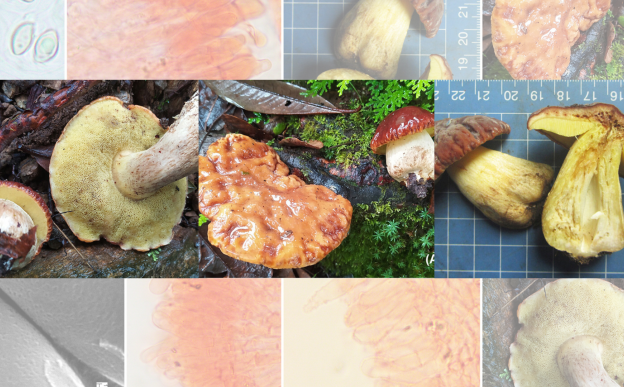
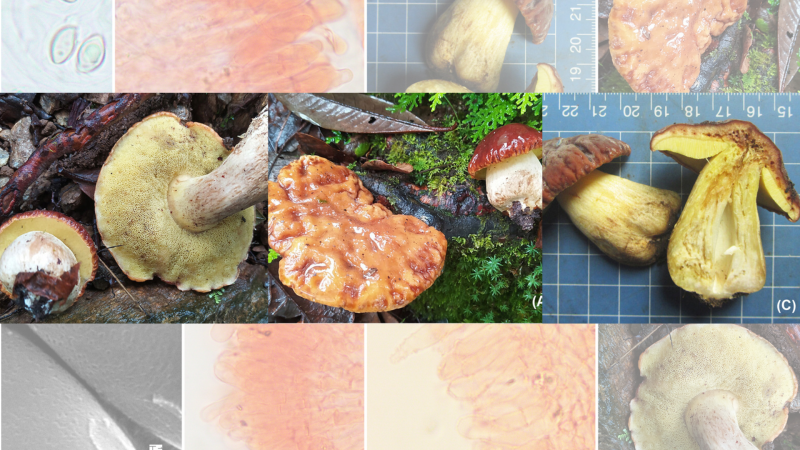
Physically, Hemileccinum indicum is a bolete, a type of mushroom that has pores instead of gills under its cap. It features a wrinkled, violet-brown cap that fades to a leathery brown as it matures, and a pastel yellow pore surface that does not change colour when bruised. Under a Scanning Electron Microscope (SEM), the mushroom reveals its most unique trait: tiny, intricate pits on its spores. These microscopic pinholes and its smooth stem surface distinguish Hemileccinum indicum from its American and Asian relatives, which often have larger, smooth spores or scaly stems.
The mushroom’s name carries a simple but significant meaning. The specific epithet indicum is derived from Latin and refers directly to India, the country where the species was first identified. Ecologically, these mushrooms are ectomycorrhizal, meaning they form a vital symbiotic partnership with the roots of trees, such as the Quercus (oak) species they were found under, helping the forest exchange nutrients and stay healthy.